Ever heard of B2B2C but aren’t quite sure what it really means? You’re not alone. This hybrid business model is quietly reshaping industries, blending the strengths of B2B and B2C into something smarter, faster, and more customer-centric. Let’s break it down—no jargon, just clarity.



What Exactly Is B2B2C?

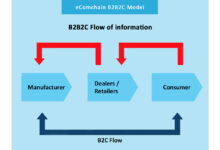
The term B2B2C—short for Business-to-Business-to-Consumer—refers to a model where a company sells its products or services to another business, which then delivers them directly to the end consumer. It’s a three-way relationship that combines the scalability of B2B with the personalization of B2C.
The Core Structure of B2B2C
At its heart, B2B2C involves three key players: the original producer (B2B), the intermediary (often a retailer, platform, or service provider), and the final customer (B2C). This structure allows brands to expand their reach without managing direct consumer relationships.
- The manufacturer creates the product.
- The distributor or platform handles sales and delivery.
- The consumer enjoys the product or service.
This model is especially powerful in digital ecosystems where platforms act as trusted gateways to customers.
How B2B2C Differs from Traditional Models
Unlike pure B2B, where transactions end at the business level, B2B2C continues the value chain all the way to the consumer. And unlike pure B2C, the brand doesn’t always own the customer relationship. According to McKinsey, this hybrid approach enables companies to access new markets while leveraging partner infrastructure.
“B2B2C is not just a distribution model—it’s a strategic shift in how value is co-created across ecosystems.”
Why B2B2C Is Gaining Massive Traction
The global shift toward digital platforms, omnichannel experiences, and ecosystem-based competition has made B2B2C not just relevant—but essential. Companies are realizing that controlling the entire customer journey isn’t always necessary or efficient.
Expanding Market Reach Without Direct Investment
One of the biggest advantages of the b2b2c model is the ability to scale quickly. By partnering with established retailers or digital platforms, brands can instantly access large customer bases without building their own sales teams or logistics networks.
- Example: A skincare brand partners with Sephora, gaining access to millions of beauty consumers.
- Benefit: Lower customer acquisition costs and faster time-to-market.
This kind of leverage is especially valuable for startups and mid-sized companies looking to grow.
Enhanced Data Sharing and Customer Insights
In a well-structured B2B2C relationship, data flows between partners, enabling deeper understanding of consumer behavior. While the intermediary handles transactions, the original brand can still gain insights into preferences, usage patterns, and feedback.
For instance, Salesforce highlights how integrated CRM systems allow B2B suppliers to see downstream customer engagement, helping them refine product development and marketing.
Real-World Examples of B2B2C in Action
Theoretical models are great, but real-world applications make the concept click. Let’s look at some industries where B2B2C isn’t just working—it’s thriving.
E-Commerce Marketplaces
Platforms like Amazon, Alibaba, and Walmart Marketplace are textbook examples of B2B2C. Third-party sellers (B2B) list their products, while the platform handles fulfillment, customer service, and delivery to end consumers (B2C).
- Brand benefits: Access to massive traffic and trust in the platform.
- Platform benefits: Diverse inventory without holding stock.
- Consumer benefits: Convenience, competitive pricing, and fast shipping.
According to Statista, third-party sellers accounted for over 60% of Amazon’s sales in 2023—proof of B2B2C’s dominance.
FinTech and Banking Partnerships
Many fintech startups operate on a B2B2C model. For example, a company like Plaid provides APIs (B2B) to banks and financial apps, which then offer seamless account linking to consumers (B2C).
Another example is embedded finance, where non-financial companies (like retailers or telecoms) offer financial services through partnerships with banks. A mobile carrier might offer installment plans powered by a financial institution—B2B2C in action.
Healthcare and Telemedicine
In healthcare, B2B2C is transforming patient access. Companies like Teladoc provide telehealth platforms (B2B) to employers or insurers, who then offer virtual care to employees or members (B2C).
- Employers get a wellness benefit to offer staff.
- Teladoc reaches patients without direct marketing.
- Patients enjoy convenient, low-cost consultations.
This model reduces friction and increases adoption of digital health services.
The Strategic Advantages of Adopting B2B2C
Companies that embrace B2B2C aren’t just following a trend—they’re positioning themselves for long-term resilience and growth. Let’s explore the core strategic benefits.
Reduced Operational Overhead
By outsourcing customer-facing operations like sales, support, and logistics to partners, brands can focus on what they do best: innovation, quality, and supply chain management.
For example, a software company might develop a productivity tool and license it to enterprise platforms like Microsoft or Google, who then bundle it into their ecosystems. The software firm avoids building a global sales force while still reaching millions of users.
Increased Brand Visibility and Trust
Being associated with a trusted intermediary can boost credibility. Consumers are more likely to try a new product if it’s sold through a brand they already know and trust.
- A new organic snack brand gains instant legitimacy by appearing on Whole Foods’ shelves.
- A cybersecurity tool becomes more appealing when integrated into a well-known IT management suite.
This halo effect is a powerful, often underestimated advantage of the b2b2c model.
Agility in Responding to Market Changes
B2B2C partnerships allow for rapid pivoting. If consumer demand shifts, brands can work with their partners to adjust messaging, pricing, or distribution without overhauling their entire business.
During the pandemic, many manufacturers shifted from B2B-only models to B2B2C by partnering with e-commerce platforms to reach homebound consumers. This agility saved businesses and created new revenue streams.
Challenges and Risks in the B2B2C Model
While B2B2C offers many benefits, it’s not without its challenges. Understanding these risks is crucial for building sustainable partnerships.
Limited Control Over the Customer Experience
Since the intermediary manages the final touchpoint, the original brand has less control over how its product is presented, sold, or supported.
Imagine a high-end audio brand whose products are bundled with low-cost accessories on a discount marketplace. The brand’s premium image could be diluted, even if the product quality remains high.
Solution: Establish clear brand guidelines and service level agreements (SLAs) with partners.
Data Access and Privacy Concerns
While data sharing is a benefit, it’s also a risk. Partners may be reluctant to share detailed consumer insights due to privacy policies or competitive concerns.
Additionally, compliance with regulations like GDPR or CCPA becomes more complex when multiple parties handle customer data.
- Brands may only receive aggregated, anonymized data.
- Real-time personalization becomes harder without direct access.
Transparent data-sharing agreements and secure integration protocols are essential.
Dependency on Partner Performance
If your success depends on a partner’s sales performance, marketing efforts, or logistics efficiency, you’re exposed to their risks.
For example, if a retail partner faces a supply chain disruption or negative PR, your product could suffer by association—even if you’re not at fault.
“In B2B2C, your brand’s reputation is only as strong as your weakest partner.”
How to Build a Successful B2B2C Strategy
Success in B2B2C isn’t accidental—it’s designed. Here’s a step-by-step guide to building a robust B2B2C strategy that delivers results.
Identify the Right Partners
Not all partners are created equal. Look for companies that align with your brand values, target audience, and service standards.
- Conduct due diligence on potential partners’ reputation, customer base, and operational capabilities.
- Start with pilot programs before scaling.
- Use co-branding opportunities to strengthen mutual visibility.
For example, a sustainable fashion brand should partner with eco-conscious retailers, not fast-fashion giants.
Design Seamless Integration
Technology integration is key. Whether it’s API connectivity, inventory sync, or CRM alignment, the smoother the integration, the better the experience for all parties.
Tools like MuleSoft or Zapier can help automate data flow between systems. According to Gartner, companies with strong integration capabilities see 30% higher partner satisfaction and faster time-to-value.
Create Joint Value Propositions
The most successful B2B2C relationships are built on mutual benefit. Instead of just selling to a partner, co-create value.
- Develop exclusive products or bundles for the partner’s audience.
- Co-invest in marketing campaigns.
- Share customer insights to improve offerings.
For instance, Coca-Cola and McDonald’s have a long-standing B2B2C partnership where both brands benefit from bundled offerings and shared marketing.
The Future of B2B2C: Trends to Watch
The B2B2C model is evolving rapidly. As technology advances and consumer expectations shift, new trends are shaping its future.
Rise of Embedded Commerce
Embedded commerce—where purchasing happens within non-commerce platforms—is a major driver of B2B2C growth. Think of buying a concert ticket directly in a social media app or ordering groceries through a smart speaker.
In these cases, the platform (B2B) enables the transaction, while the retailer (B2C) fulfills it. The original brand (e.g., the food producer) may not even be visible to the consumer—but still benefits.
AI-Powered Personalization Across Ecosystems
Artificial intelligence is enabling hyper-personalization at scale. In a B2B2C setup, AI can analyze consumer behavior across platforms and deliver tailored recommendations—even when the brand doesn’t own the customer data.
For example, Netflix uses AI to recommend content, but the studios that produce the shows gain insights into viewing patterns, helping them plan future productions.
Greater Emphasis on Sustainability and Ethics
Consumers are increasingly concerned about sustainability, labor practices, and corporate responsibility. In B2B2C models, transparency across the supply chain is becoming a competitive advantage.
Brands that can prove ethical sourcing and environmental responsibility—through blockchain tracking or third-party certifications—gain favor with both partners and end customers.
B2B2C vs. Other Business Models: A Comparative Analysis
To fully appreciate B2B2C, it helps to compare it with other common models. Let’s break down the differences.
B2B2C vs. Pure B2B
Pure B2B focuses on selling products or services to other businesses, with no direct consumer involvement. Think of a company selling industrial machinery to factories.
- B2B: Longer sales cycles, relationship-driven, fewer customers.
- B2B2C: Shorter path to consumer, brand visibility, data potential.
B2B2C adds a layer of consumer impact, making it more dynamic and market-responsive.
B2B2C vs. Pure B2C
Pure B2C involves direct sales to consumers. Examples include Apple’s online store or Nike’s app.
- B2C: Full control over customer experience, higher operational costs.
- B2B2C: Shared control, lower overhead, reliance on partners.
B2B2C offers a middle ground—scalability without the burden of direct customer management.
B2B2C vs. D2C (Direct-to-Consumer)
D2C brands like Warby Parker or Casper cut out intermediaries entirely. While this gives them full control, it also requires heavy investment in marketing, logistics, and customer service.
B2B2C, in contrast, leverages existing channels. Many D2C brands are now adopting hybrid models—selling both directly and through retailers—effectively becoming B2B2C players.
Measuring Success in B2B2C Partnerships
How do you know if your B2B2C strategy is working? It’s not just about sales volume—success must be measured across multiple dimensions.
Key Performance Indicators (KPIs)
Track metrics that reflect both business and consumer outcomes:
- Sales volume through partner channels
- Customer acquisition cost (CAC) via partners
- Partner satisfaction and retention rate
- Consumer satisfaction (NPS, reviews)
- Brand lift and awareness metrics
Regular reporting and joint reviews with partners ensure alignment and continuous improvement.
Customer Lifetime Value (CLV) in B2B2C
Even if you don’t own the customer relationship, you can still estimate CLV by analyzing repeat purchase patterns through partners.
For example, if data shows that consumers who buy your coffee brand through a subscription box are likely to reorder every two months, you can project long-term value and optimize pricing or promotions accordingly.
Feedback Loops and Continuous Improvement
Establish regular feedback mechanisms with partners and, where possible, end customers. Use surveys, focus groups, and data analytics to refine your offering.
Continuous iteration turns B2B2C from a static distribution model into a dynamic growth engine.
What is B2B2C?
B2B2C, or Business-to-Business-to-Consumer, is a business model where a company sells its products or services to another business, which then delivers them to the end consumer. It combines elements of B2B and B2C to create a collaborative value chain.
How does B2B2C benefit small businesses?
Small businesses can leverage B2B2C to access larger markets through established partners, reduce customer acquisition costs, and scale without heavy investment in sales and distribution infrastructure.
Can a brand maintain its identity in a B2B2C model?
Yes, but it requires careful partner selection, clear brand guidelines, and co-marketing efforts. Brands must ensure their values and messaging are preserved throughout the customer journey.
Is B2B2C the same as reselling?
Not exactly. While reselling is a component, B2B2C goes further by often involving shared branding, data integration, and collaborative customer experiences, rather than just transferring ownership.
What industries are best suited for B2B2C?
Industries with strong ecosystem dynamics—like e-commerce, fintech, healthcare, SaaS, and consumer goods—are ideal for B2B2C due to their reliance on platforms, partnerships, and digital integration.
The B2B2C model is more than a buzzword—it’s a strategic evolution in how businesses create and deliver value. By bridging the gap between B2B efficiency and B2C engagement, it offers a powerful path to growth, innovation, and customer satisfaction. Whether you’re a manufacturer, tech provider, or service brand, understanding and leveraging B2B2C can unlock new opportunities in today’s interconnected economy. The future belongs to ecosystems, not silos—and B2B2C is leading the way.
Further Reading: